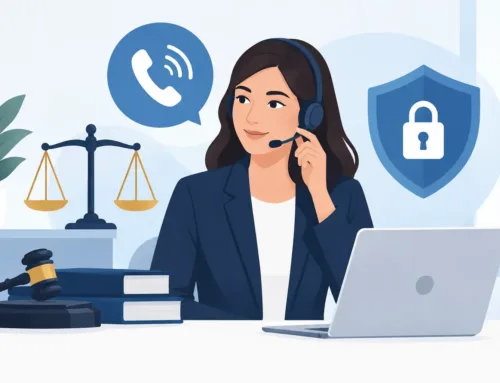
A missed call at 8:15 p.m. may be more than a missed call. For a law firm, it could be a prospective client who needs help now. For a medical practice, it may be a patient with an urgent concern. For a property manager or home service company, it can be the customer who calls the next provider if no one answers. When comparing virtual receptionist vs call center support, the real question is not simply who can pick up the phone. It is who can represent your business with the judgment, professionalism, and urgency your callers expect.
Both services provide outsourced phone coverage, but they are built for different types of conversations. Understanding that distinction helps business owners and operations leaders choose a solution that protects the caller experience while supporting their internal team.
What Is a Virtual Receptionist?
A virtual receptionist is a live, trained agent who handles calls as an extension of your office. The agent follows your preferred greeting, learns your call-handling instructions, gathers the information your team needs, and routes or documents each call based on your workflow.
The service is designed to feel personal. Rather than treating every caller as the next interaction in a queue, a virtual receptionist recognizes that a caller may need an appointment, a message delivered to a specific person, a maintenance request documented, or an urgent issue escalated immediately.
For example, a dental office may ask its virtual receptionist to answer with the practice name, screen appointment requests, record insurance questions, and alert the on-call provider about post-procedure concerns. A plumbing company may need the agent to collect the service address, identify the nature of the emergency, and dispatch the right technician. The details matter because they determine what happens after the call ends.
Virtual receptionist support is commonly used for after-hours coverage, overflow calls during busy periods, lunch breaks, weekends, holidays, and 24/7 availability. It can also support businesses that want a live person answering every call without hiring and scheduling a full internal reception staff.
What Is a Call Center?
A call center is generally built to manage a larger volume of inbound or outbound calls through standardized processes. Call centers may handle customer service, order status questions, surveys, technical support, appointment reminders, sales outreach, or broad first-level support for many customers.
That model can be highly effective when speed, volume, and consistency across a defined set of questions are the priority. A retailer handling hundreds of delivery-status inquiries or a company conducting outbound customer surveys may benefit from the scale and structure of a traditional call center.
However, a call center is not automatically the same as a receptionist service. Some call centers use highly scripted interactions, short call targets, shared agent pools, and general routing rules. Those practices may not fit a business where callers expect a knowledgeable, calm, and accountable first point of contact.
The line can overlap. A quality answering service may operate with call-center technology, trained teams, and round-the-clock staffing. The meaningful difference is the service model: whether the team is configured to handle calls like your front desk or simply process calls efficiently.
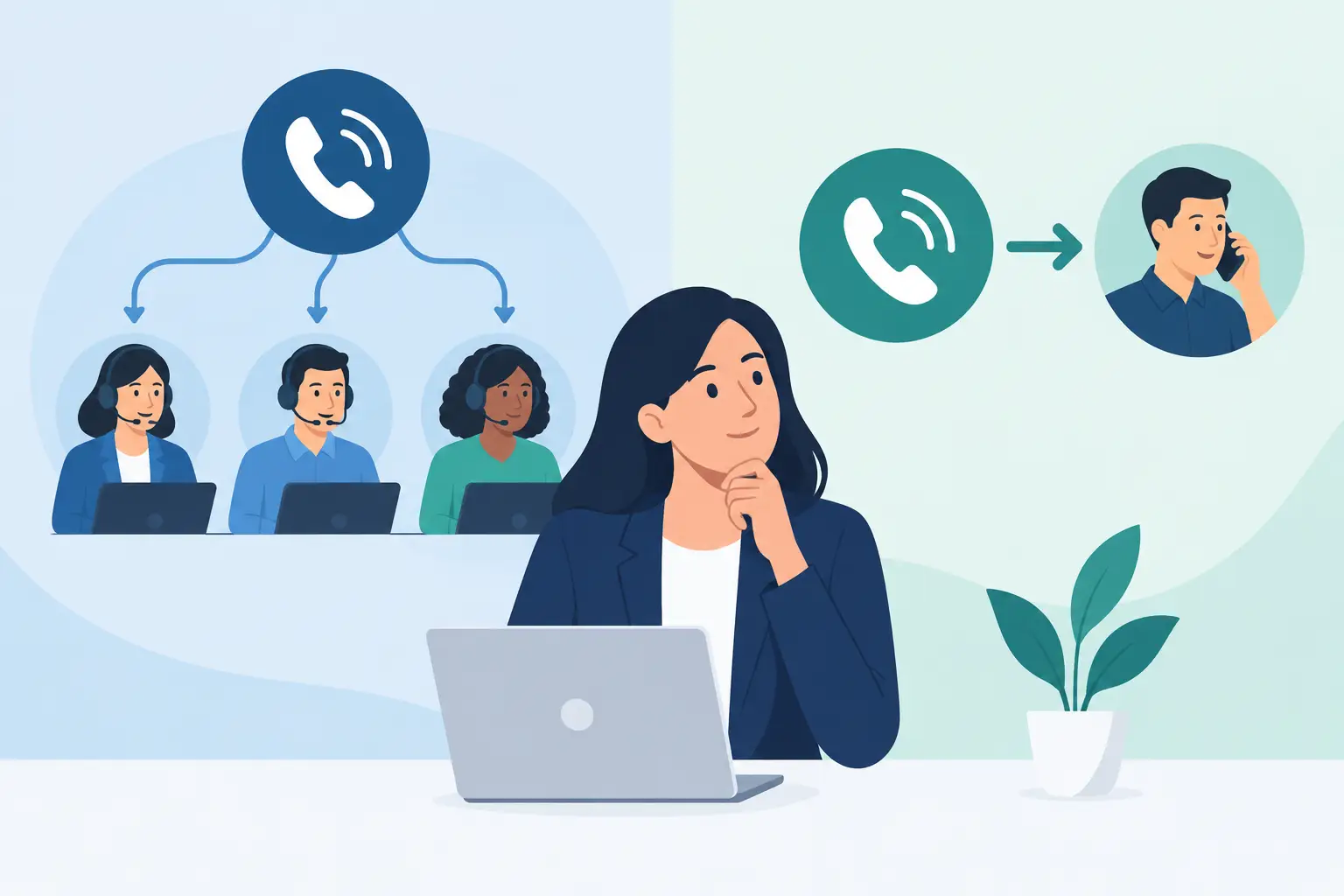
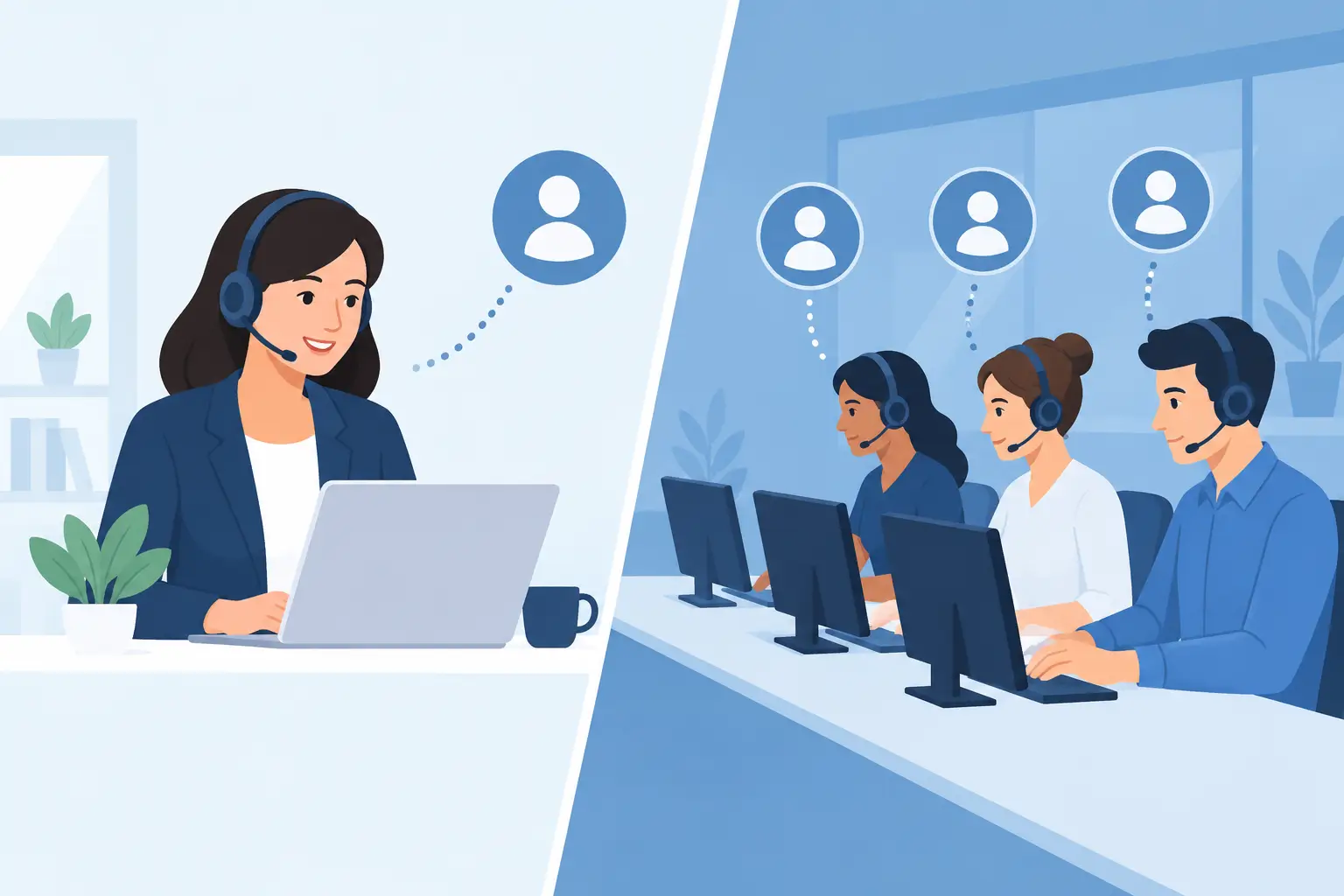
Virtual Receptionist vs Call Center: The Practical Differences
The choice often comes down to the level of personalization your calls require.
Caller experience and brand representation
A virtual receptionist service is centered on representing your business. Agents use your business name, follow a customized script, and handle calls according to the tone and standards you set. The goal is to give callers the reassurance of reaching a helpful member of your team.
A call center may also use a script, but its approach is often broader and more transactional. That is not a flaw when the call is simple. It can become a problem when a caller is distressed, needs discretion, or has a situation that does not fit a standard menu of responses.
For healthcare, legal, funeral home, and property management calls, empathy and careful listening are not extras. They are part of the service your caller is evaluating.
Customization and call handling
Virtual receptionists typically work from detailed call instructions. These may include which calls should be transferred, which staff members are on call, what information to collect, when to schedule an appointment, and how to classify an urgent matter. Customized documentation gives your team the context needed to respond effectively.
Traditional call centers often work best with narrower call paths. If your needs are limited to answering common questions, verifying information, or directing callers to a department, that structure can be enough. If your rules change by time of day, provider, property, service area, or issue type, more tailored receptionist support is usually a better fit.
Urgency and escalation
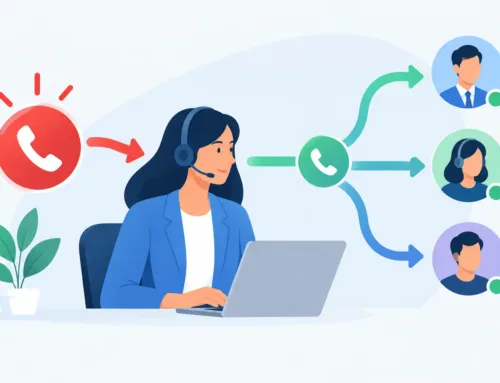
An answering partner should know the difference between a message that can wait until morning and an issue that requires immediate action. Virtual receptionist services are commonly designed around escalation protocols, including on-call schedules, priority message delivery, and detailed instructions for urgent calls.
This is particularly valuable for practices and service businesses that cannot afford ambiguity. A patient calling with a concerning symptom, a tenant reporting water damage, or a homeowner without heat needs more than a generic promise that someone will call back.
Compliance, privacy, and sensitive information
Businesses in regulated or high-trust industries need a provider that can support appropriate privacy and security requirements. Healthcare organizations may require HIPAA-compliant call handling and secure message delivery. Businesses that take payment information need PCI-conscious processes. Legal offices need careful intake procedures and discretion.
Not every call center is configured for these needs. Before choosing a provider, ask how messages are delivered, how caller information is documented, who can access it, and how the service supports your compliance obligations. A lower monthly rate is not a bargain if it introduces avoidable risk.
Staffing, coverage, and cost
Both options can reduce the cost and complexity of staffing phones internally. The better choice depends on what coverage must accomplish.
A high-volume call center may be the more economical option for routine, repetitive calls at scale. A virtual receptionist can provide greater value when each call represents a lead, a client relationship, a patient concern, or an urgent service request. The cost of mishandling even a small number of those calls can exceed the difference in service fees.
It is also worth looking beyond the monthly price. Consider whether the provider offers US-based live agents, bilingual support, local or dedicated phone numbers, flexible forwarding options, reporting, and 24/7 coverage. Those details affect how well the service works in real operating conditions.
When a Call Center May Be the Better Choice
A call center can be the right solution if your primary need is large-scale, standardized communication. It may fit organizations that need outbound campaigns, broad customer support, basic order or account assistance, or a team dedicated to high-volume routine inquiries.
The key is to be honest about the calls your business receives. If most callers need only a quick, predictable answer, a generalized call center model may serve you well. If calls frequently require context, discretion, scheduling, triage, or thoughtful escalation, a more personalized receptionist model is likely the safer choice.
Questions to Ask Before You Choose
Before outsourcing your phones, map the calls that matter most. Identify what happens after hours, what qualifies as urgent, who should receive each type of message, and what information your staff needs to take action. Then ask prospective providers how they would handle real examples from your business.
You should also ask whether agents will answer in your company name, whether scripts and protocols can be updated, how quickly urgent messages are delivered, and what backup procedures exist if a primary contact does not respond. For healthcare and other sensitive industries, confirm the compliance and secure messaging capabilities that apply to your workflow.
Elation Answering Service approaches live call handling with this level of customization because callers do not experience your business in theory. They experience it one conversation at a time.
The right partner should leave your callers feeling heard, your team properly informed, and your operation ready for whatever the next call brings.